

What happens when contemplative practices such as mindfulness enter digital systems that are designed for speed, scale and engagement?
Digital environments
Recently I had the opportunity to speak about mindfulness in the digital world at the Lifestyle Medicine and Wellbeing Congress in Thailand. My talk explored a question that feels increasingly important for all of us working in wellbeing, healthcare and education.
What happens when contemplative practices such as mindfulness enter digital systems that are designed for speed, scale and engagement?
Here is what I shared during my talk ….

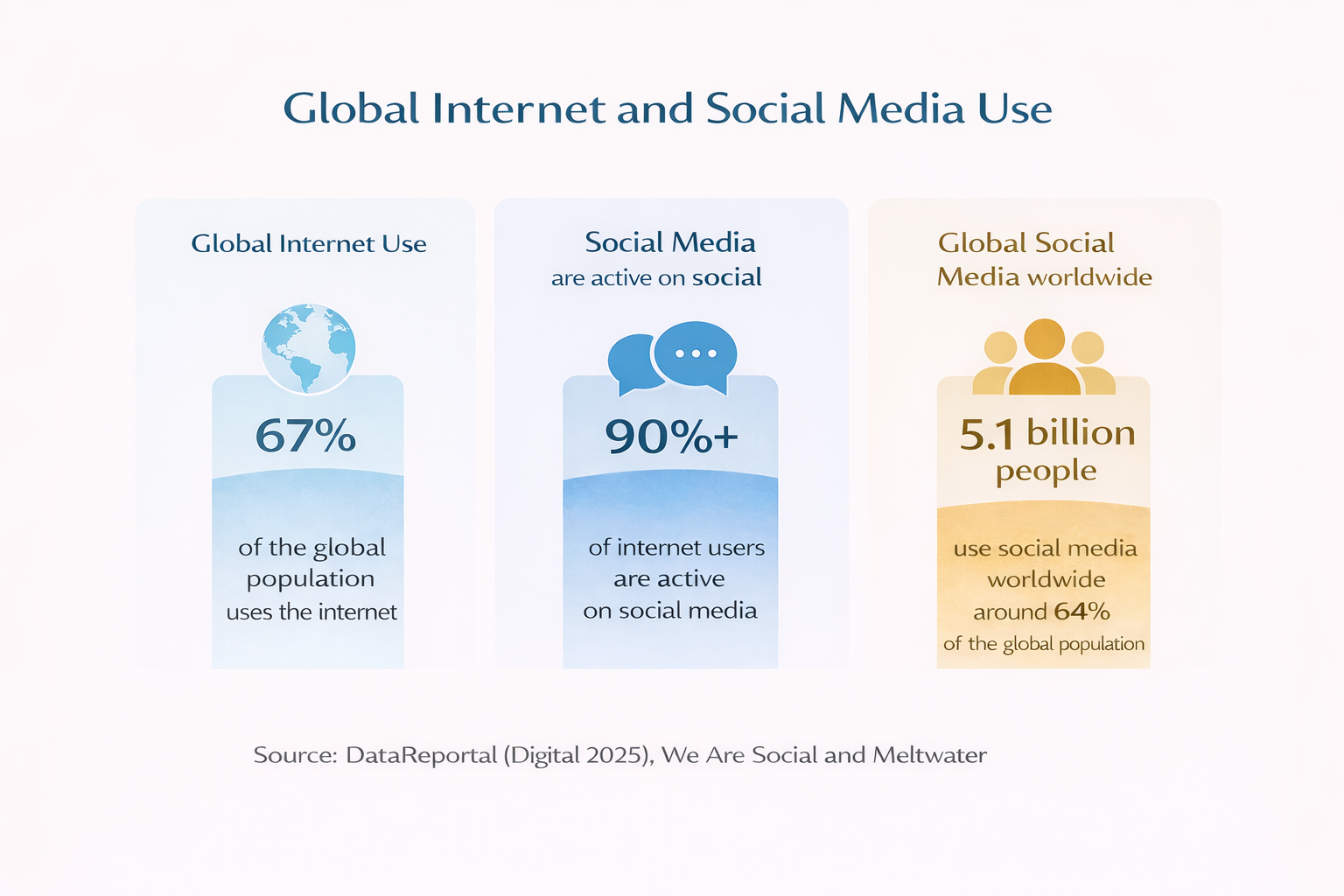
Digital technologies are now deeply embedded in how we live and work. Around sixty seven percent of the global population now uses the internet, and more than ninety percent of internet users are active on social media. That equates to over five billion social media users worldwide.
Digital environments are no longer simply tools we occasionally use. They are environments that shape how we pay attention.
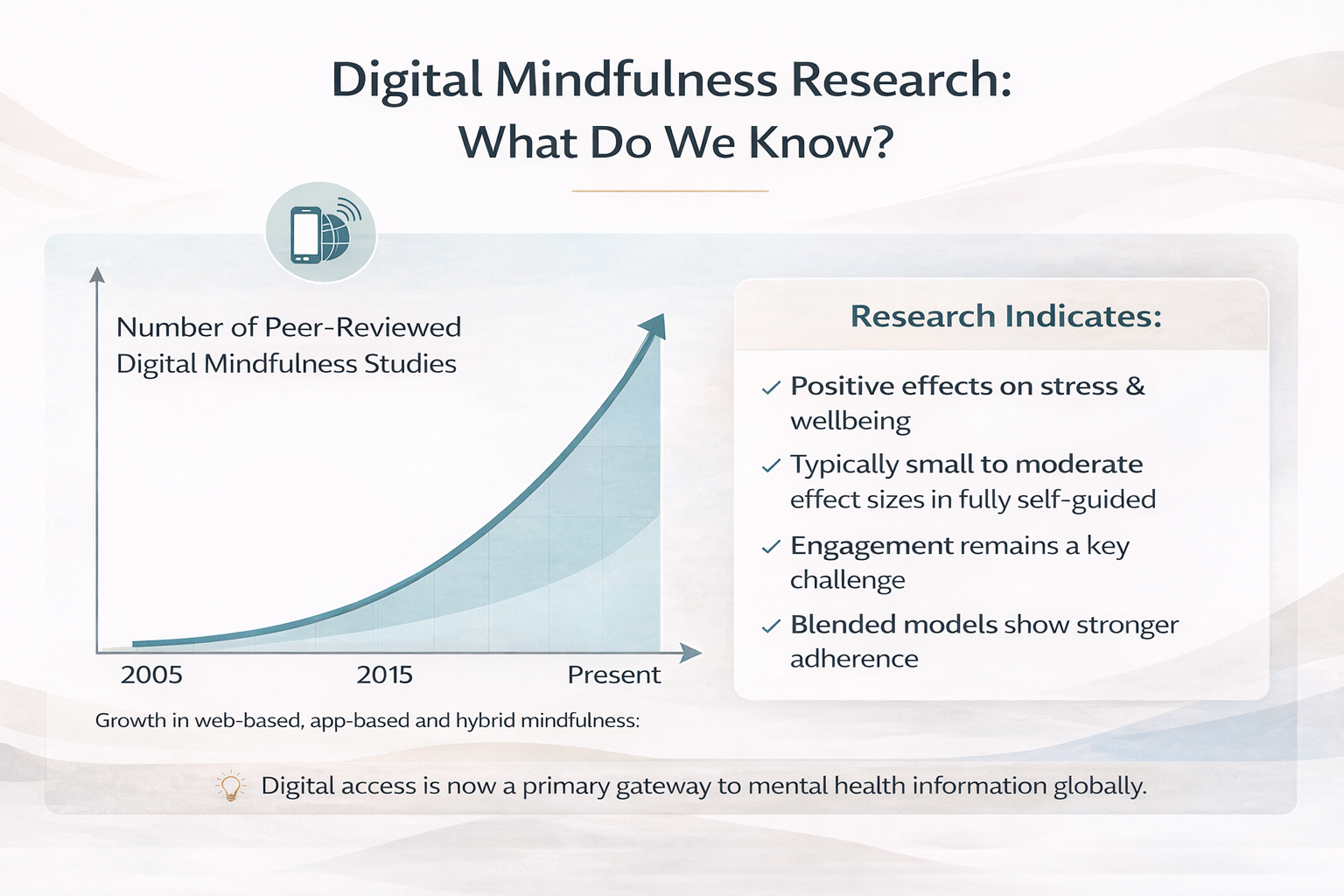
At the same time, mindfulness has increasingly entered the digital space. The first web-based mindfulness interventions appeared in the early 2000s. By around 2010 research into online delivery was growing, and from the mid 2010s onwards the rapid expansion of smartphone apps brought mindfulness to millions of people worldwide.
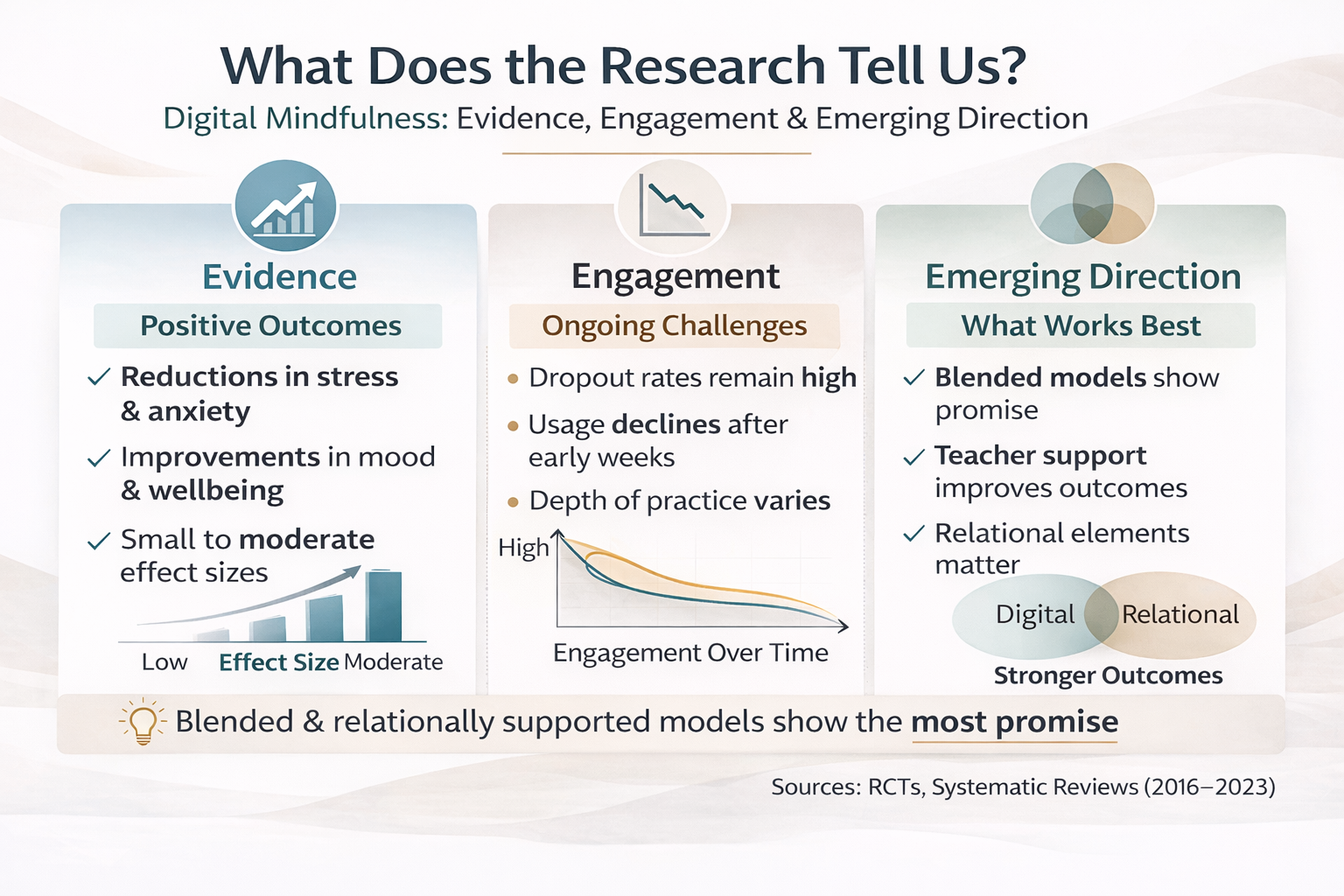
Research into digital mindfulness programmes has shown promising results. Structured programmes delivered online can support reductions in stress and improvements in wellbeing. However, engagement and adherence remain ongoing challenges.
Alongside digital mindfulness programmes, interest is now growing in the role of artificial intelligence within wellbeing and mental health support. The empirical evidence examining the impact of AI on mindfulness related capacities is still very limited. Digital mindfulness interventions have a stronger evidence base, while the effects of AI interaction on attention, awareness and contemplative qualities remain largely unexplored.
At the same time, research suggests that AI systems may support aspects of emotional wellbeing and engagement when designed responsibly. Emerging studies indicate that AI tools incorporating reflective prompts may support learning engagement and aspects of psychological wellbeing. Yet there are also significant concerns. AI systems can reflect underlying data biases and may struggle to respond safely to complex psychological states without human oversight.
These emerging technologies raise important questions for anyone working in mental health and wellbeing.
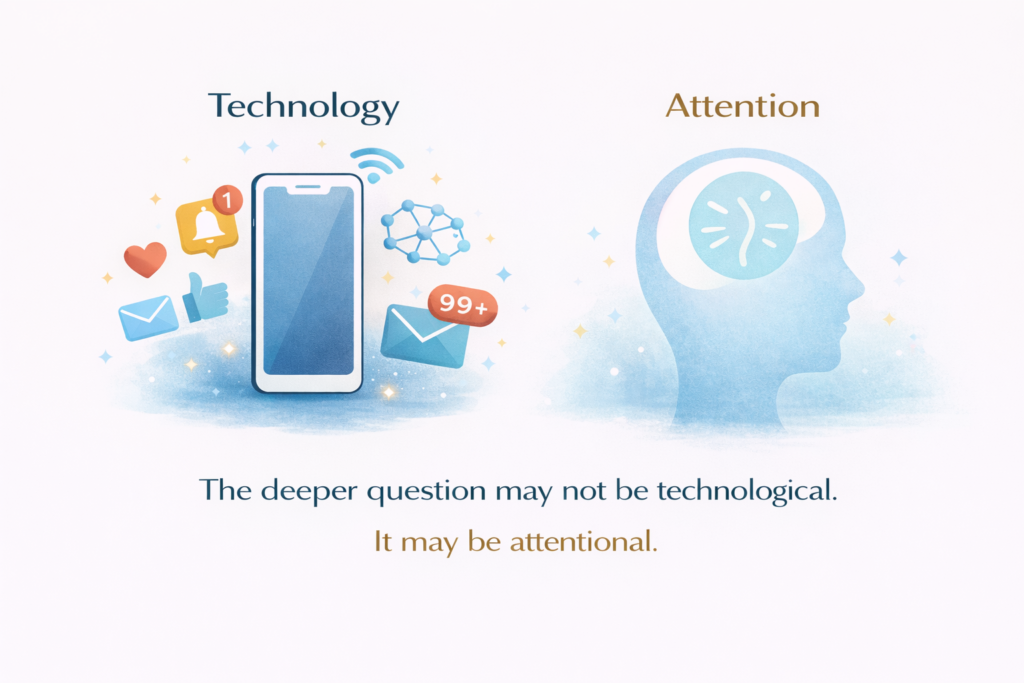
Most digital systems today are designed to optimise attention. Platforms aim to maximise engagement, increase interaction and keep users moving from one piece of content to the next. Large scale platforms such as TikTok, YouTube and Meta operate business models built on attention capture and retention. Social media missions often emphasise connection, creativity and community. Yet the underlying systems also encourage rapid evaluation. We are asked to decide quickly. Like or dislike. Agree or cancel. Improve ourselves. Present our best version of ourselves.
Over time this creates habits of mind.
We become quicker to judge.
Quicker to compare.
Quicker to react.Mindfulness invites something different.
Instead of deciding quickly, we sit.
Instead of judging, we notice.
Instead of reacting immediately, we allow space.
The tensions that emerge
Practices within mindfulness and other contemplative traditions cultivate qualities such as patience, steadiness, curiosity, empathy and kindness. They encourage us to explore experience rather than immediately evaluate it.
When we place these two environments side by side an interesting tension emerges.
Digital culture often rewards speed, certainty and visibility.
Mindfulness cultivates patience, curiosity and openness.
This does not mean the digital world and contemplative practice are incompatible. The real question may be how our digital environments shape attention and how intentionally we design them.
Digital environments train attention every day.
Mindfulness also trains attention.
If we are not intentional, our attention will simply be shaped by default.
What are we doing at Oxford Mindfulness?
At Oxford Mindfulness we are exploring this through several approaches. These include structured digital programmes that maintain relational integrity, blended learning models that combine digital access with human teaching, and careful development of digital tools supported by governance and ethical oversight.
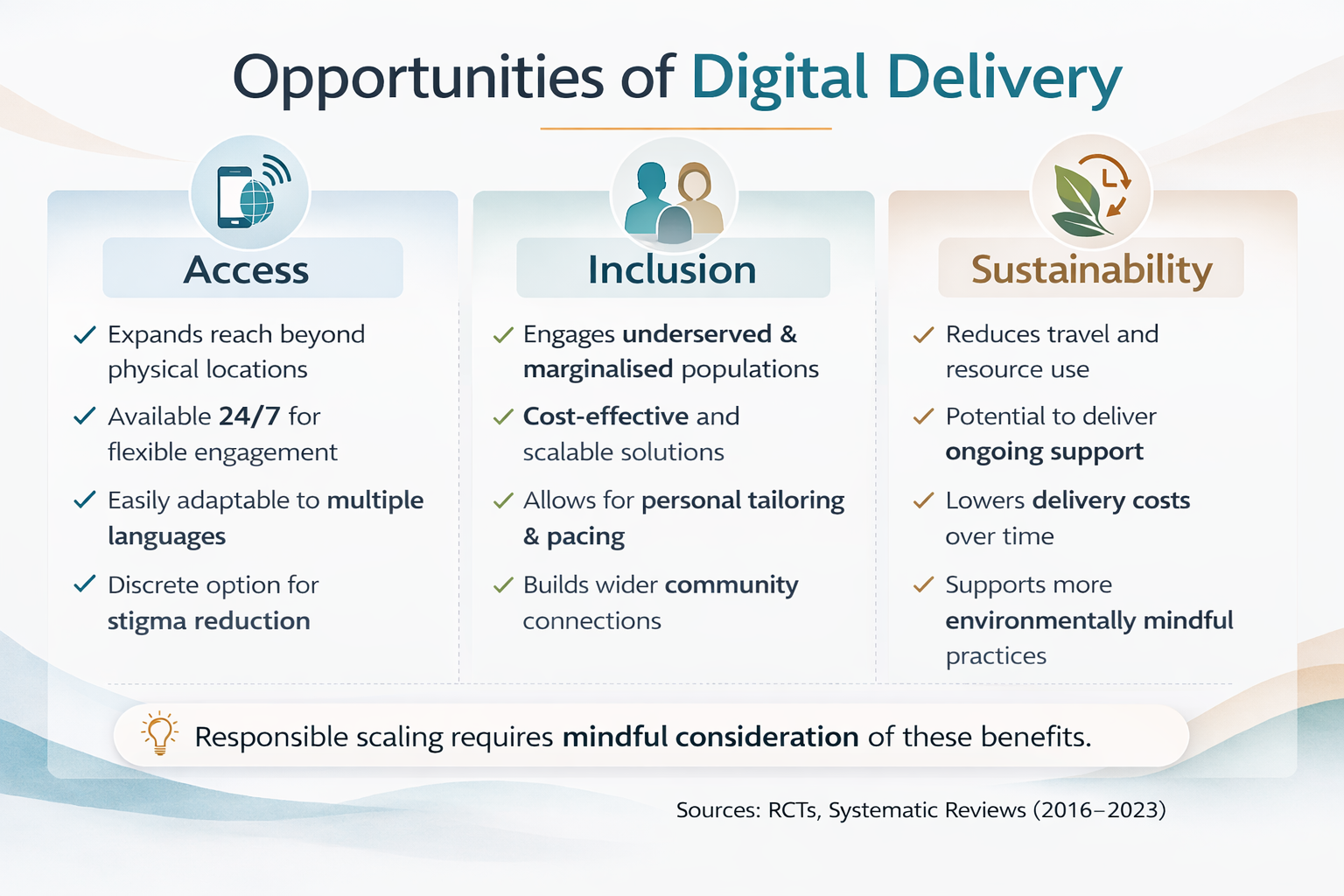
“For organisations working in mindfulness, the challenge is therefore not whether to engage with digital technologies but how to do so ethically and thoughtfully.”
Digital delivery allows us to reach people who might otherwise never access mindfulness training. At the same time, it raises important questions about depth, relational connection, data privacy and duty of care.
These questions are not barriers. They are responsibilities.
As digital technologies continue to evolve, the work ahead is not simply technological.
It is ethical.
It is intentional.
And it invites us to ask how we design systems that support human flourishing rather than simply capturing attention. This is something we are thinking about at Oxford Mindfulness and invite others working in this space to get in touch with collaboration opportunities.