
At the United Nations
As I begin to wind down for the Christmas break, I’ve been reflecting on the year and particularly the last few months, which have been filled with meetings, travel, and a relentless pace. There’s one event in particular that I wanted to pause and share.
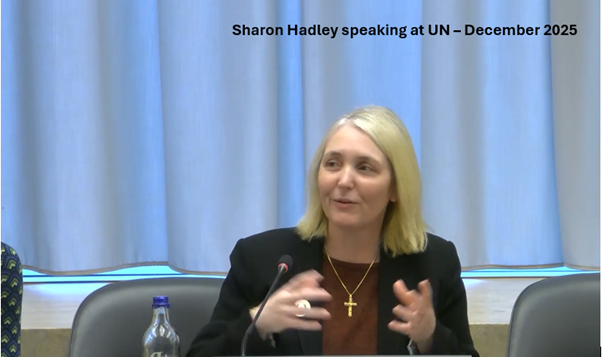
Earlier this month, I had the slightly surreal experience of speaking at the United Nations in Geneva as part of United and Present: Global Solutions from Within. It’s not a sentence I ever expected to write!
Walking into the Palais des Nations, I felt a familiar mix of excitement and nerves. Excitement because it is a privilege to be invited into that space. Nerves because the setting carries real weight. The UN represents some of the most complex and painful challenges facing the world, and talking about mindfulness there is not something to do lightly or casually.
What stayed with me most over the three days was not just the speakers or the amazing programme, but the shared tone in the room. People came together from diplomatic, clinical, academic, and contemplative settings with a genuine curiosity about how inner awareness and presence might support human rights, diplomacy, and leadership at a time when trust feels fragile and conversations are increasingly polarised.
What struck me was not the scale of the event, but the kindness in the room — people from very different backgrounds genuinely curious about how inner awareness might support leadership, dialogue, and responsibility in difficult times
Coming together
One of the most moving aspects was seeing representatives from many different meditation and contemplative traditions sitting side by side. Not trying to persuade one another or claim territory, but listening and reflecting together. There was a sense of shared purpose that felt both rare and quietly powerful.
Alongside keynote talks, the event included panel conversations that allowed for more open, reflective dialogue across disciplines. I took part in one such panel, focusing on mindfulness in organisational and institutional contexts, and what it means to hold presence, ethics, and responsibility within complex systems. That panel video is shared below for anyone who would like to watch or listen in (my talk commences at 35:00).
People from very different traditions and disciplines were able to sit together without needing to resolve differences, simply taking the work of attention and responsibility seriously
Leaving with hope
My own contribution focused on the work we do at Oxford Mindfulness and what it means to support mindfulness in real world settings without oversimplifying it. Much of our work happens behind the scenes, supporting teachers, developing courses, and working with organisations that want to engage with mindfulness in a grounded and ethically informed way.
On a personal level, the experience was humbling. It reinforced something I often return to: while mindfulness is frequently framed in individual terms, managing stress, improving focus, feeling better, its deeper value lies in how it shapes our relationships. How we listen. How we respond under pressure. How we stay present with complexity.
I left Geneva tired, but quietly hopeful. Hopeful because I’d seen what can happen when people from very different backgrounds are willing to sit together and take presence seriously. And hopeful because conversations about inner awareness are not only happening at the edges, but in places where decisions that affect societies are being made.
Coming home, I was reminded how our work at Oxford Mindfulness sits across both scales — supporting individuals in their everyday lives, while also contributing to wider conversations about presence, responsibility, and leadership at a global level
More info
The event also included a quiet inauguration of the UN Meditation Room, and a report titled The Universality of Meditation was launched shortly afterwards